A groundbreaking partnership between College of DuPage (COD), Nicor Gas, A to Z Sales and Marketing, and Stone Mountain Technologies, Inc. (SMTI) demonstrates how technical education and industry collaboration can drive workforce development and innovation.
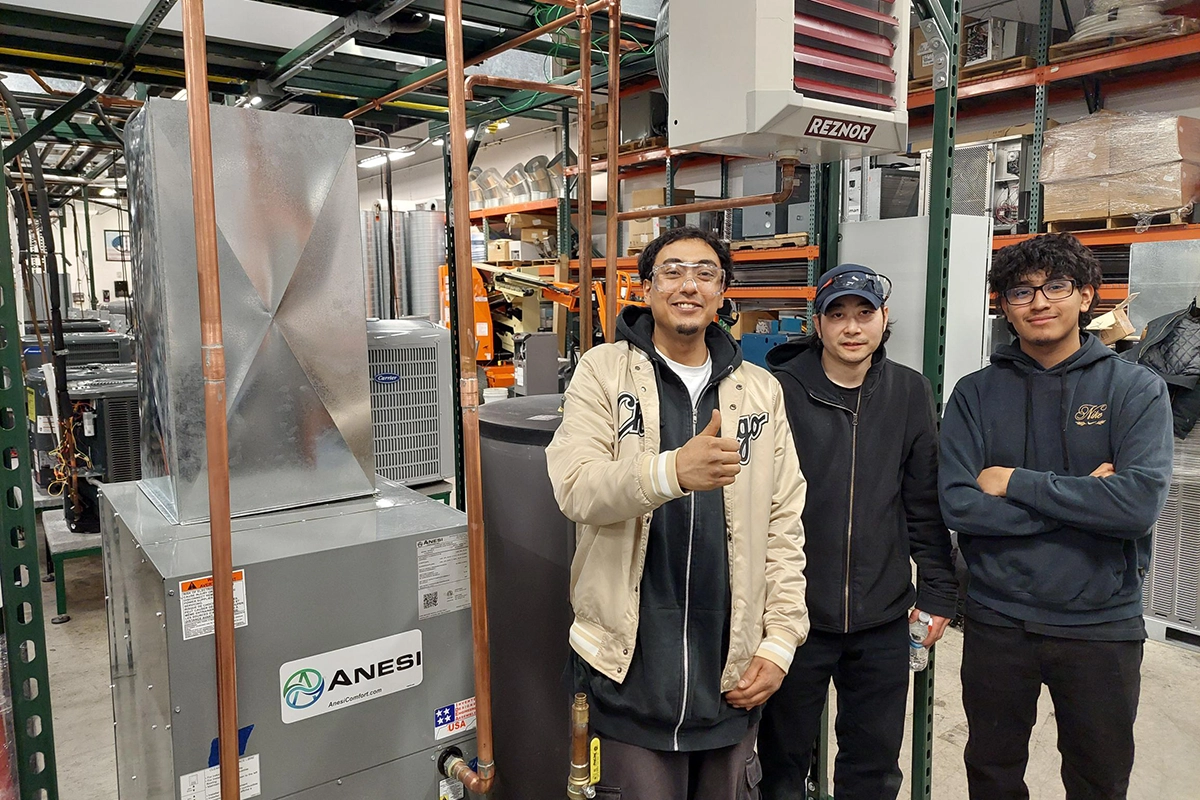
The HVACR program at College of DuPage (COD) is redefining hands-on learning. By simulating real-world scenarios, COD ensures students gain practical experience that goes far beyond traditional labs. The latest example? A live installation of an Anesi Gas Absorption Heat Pump (GAHP)—a project that is setting a new standard for technical education.
This initiative began when the local gas utility, Nicor Gas, approached COD with an idea: integrate cutting-edge gas-fired technology into the curriculum. Working alongside Robert (Bob) Clark, HVACR Department Chair at COD, Darek Nowak, Technical Sales Specialist at A to Z Sales and Marketing, and adjunct faculty at COD, and supported by SMTI’s training department, the college embraced the challenge.
Why does this matter?
Unlike classroom-only instruction, this project immerses students in every stage of the process—from planning and infrastructure adjustments to commissioning. Mimicking a real-world installation, the students relocated gas and electric lines, positioned the system outdoors, and overcame major logistical hurdles—all within an accelerated timeline of just sixteen weeks. The experience has spanned two consecutive sessions, totaling 32 weeks of hands-on engagement.
The benefits are clear:
- Students gain real-world experience they can showcase to current and future employers.
- The installation creates a training hub for local contractors, OEM professionals, and utility trade allies.
- Industry partners gain valuable insights into gas heat pump system performance under actual climate conditions, enabling comparisons with electric heat pumps.
Challenges?
Convincing the college facilities department of the long-term benefits required clear communication and collaboration. The team emphasized how the project would serve not only students but also the broader HVACR community and position the college as an example for others.
Looking ahead
COD plans to share its process at upcoming HVACR conferences, showcasing performance data and lessons learned. The goal? Inspire other technical colleges and utilities to replicate this model in their own regions.
Advice for others
“Be consistent and create positive dialogue with all stakeholders,” says Bob Clark. “Address concerns early and highlight the benefits. COD is ready to help others implement similar programs.”
Why This Matters for the Industry
This project demonstrates the power of collaboration between education, utilities, and manufacturers. It’s a blueprint for advancing workforce development, accelerating the adoption of innovative technologies, and strengthening local HVACR ecosystems.